LED Bobo balloon compliance must cover the exact final configuration. The balloon body, LED string, battery box, rod and retail packaging can create different safety, electrical and labeling obligations.
“The certificate said ‘Bobo ball.’ The final retail kit had a different LED string, battery box and rod from the sample in the report.”
That is where a simple transparent balloon becomes a multi-component compliance problem. The body may look unchanged, but one accessory substitution can alter the electrical configuration, labeling, instructions or evidence the importer expected to rely on.
FoilJoy approaches LED Bobo projects by freezing the actual kit first: balloon body, LED string, battery box, rod, electrical rating and packaging. Then the documents can be checked against something real. Buyers should not have to choose between a great-looking kit and a file they can defend—the project should be engineered so both belong to the same SKU.
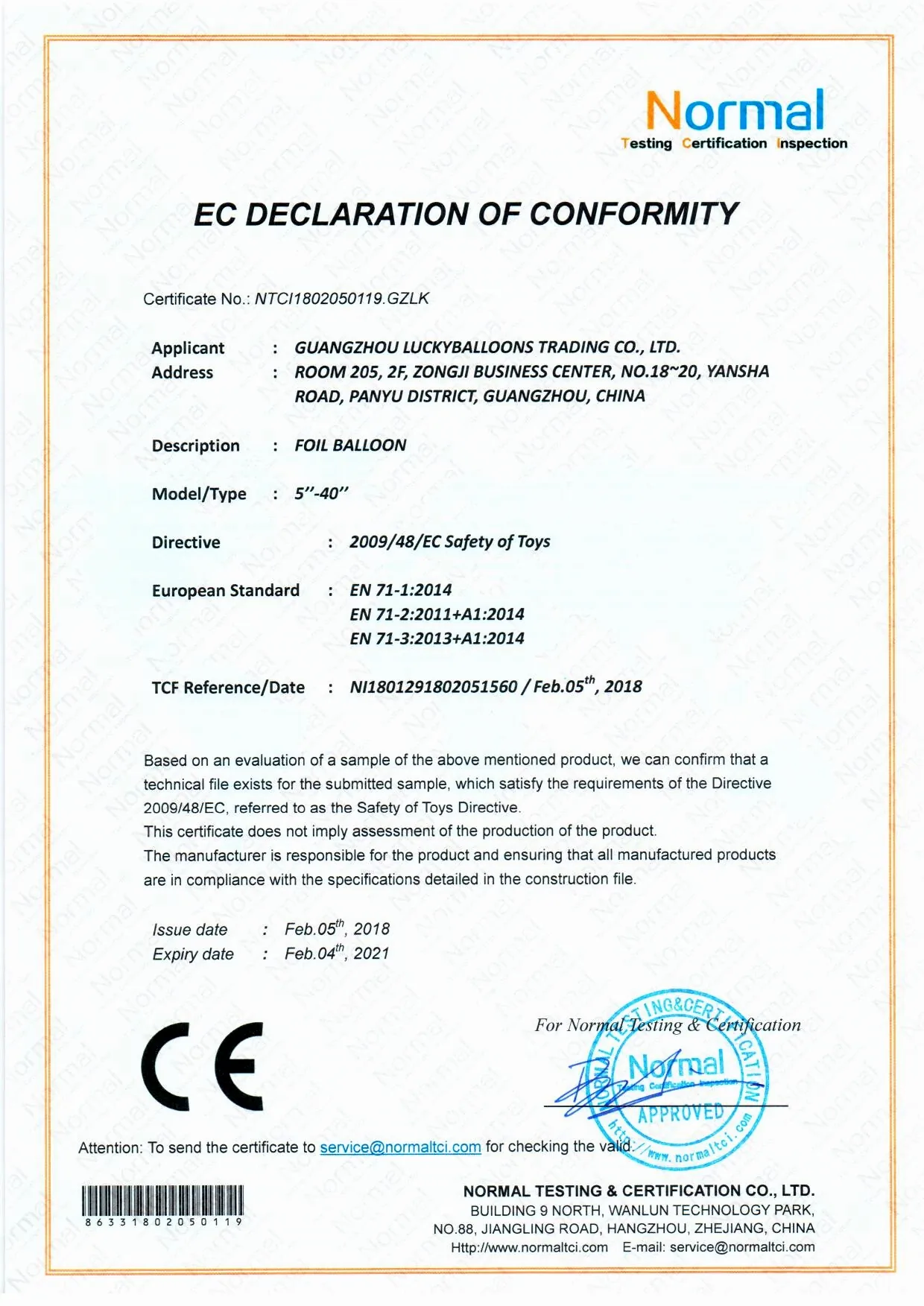
Match applicant, manufacturer, product name, model, electrical rating, photos, report number, standards, issue date and validity to the exact kit. Never treat a certificate title as blanket coverage.
One provided EN71 verification applies only to its tested sample and shows expiry on 12 September 2026. The available EMC report covers named 1.5V, 3W components only. Neither should be generalized to every product.
FoilJoy treats certificates as product-specific evidence and supports buyers in matching the final model, packaging and supplied documents.
Continue with Bobo buyer guide, EU compliance guide, News hub. Review EU EMC Directive guidance for primary guidance.
Send the product reference, artwork, quantity per design, market, packaging and delivery window.
No. It follows all applicable legislation, assessment and documentation.
No. Updated applicable evidence should be requested.
Not automatically; electrical aspects may need separate assessment.